
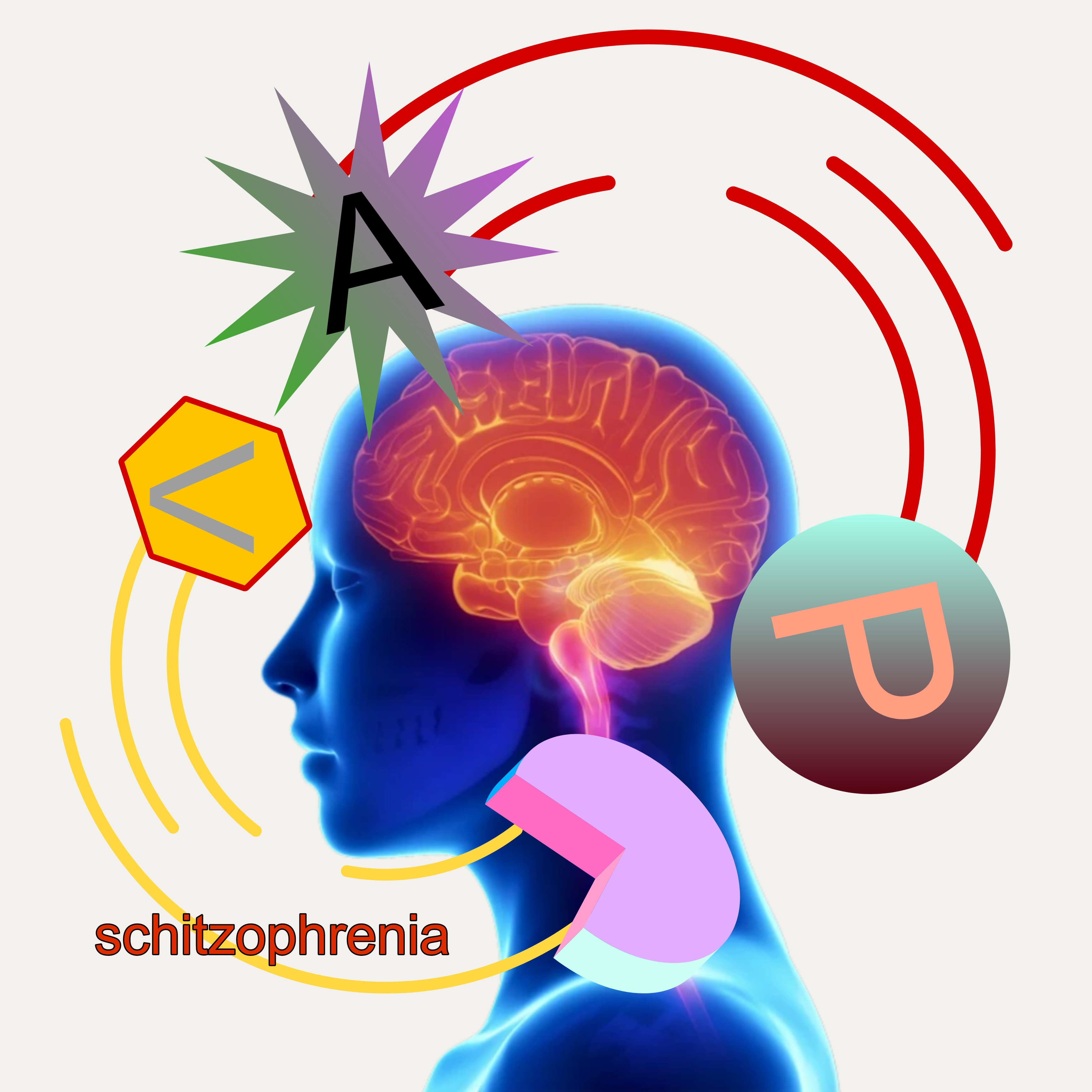
Schizophrenia is a severe and complex psychiatric disorder characterised by pervasive disruptions in thought, perception, and behaviour nature.comncbi.nlm.nih.gov. It typically emerges in late adolescence or early adulthood and carries a heavy global burden.It is often characterised by audiovisual hallucinations which can often cause burden for the individual. Estimates range from about 0.3–1% of the population experience schizophrenia explorationpub.com nature.com, with males and females affected roughly equally. The disorder is defined clinically by
positive symptoms (hallucinations, delusions, disorganised speech/behaviour),
negative symptoms (affective flattening, avolition, alogia)
cognitive impairments (deficits in memory, attention, processing speed and executive function) ncbi.nlm.nih.govnature.com.
Negative and cognitive symptoms are particularly debilitating and often resist antipsychotic treatment ncbi.nlm.nih.govnature.com. Schizophrenia is highly heritable (twin heritability ~60–80%) and has a multifactorial etiology involving genetic predisposition, prenatal and perinatal risk factors (e.g. obstetric complications, infections, early-life stress), and psychosocial stressors (e.g. urbanicity, migration, cannabis use) nature.comexplorationpub.com. The illness is associated with shortened life expectancy (often by 15 years or more due to suicide and comorbidities) and high disability ncbi.nlm.nih.govnature.com. This Introduction establishes the clinical picture and significance of schizophrenia, setting the stage for theoretical and neurological perspectives below.
Theoretical Perspectives
Psychological (Cognitive) Models: Contemporary psychological theories emphasise cognitive mechanisms and biases underlying symptoms. From this view, delusions and hallucinations arise from distorted interpretations of experience. For example, the cognitive model of psychosis proposes that individuals prone to psychosis show systematic information-processing biases and maladaptive beliefs; for example individuals with schizophrenia may have beliefs which are a far stretch from objective truth such as the belief that some external force is out to get them and they may feel negative emotions in a far more severe way then others might do so. Many patients exhibit a “jumping-to-conclusions” bias, hasty attributional styles, and inflexible thinking frontiersin.org. Dysfunctional core beliefs about the self or others can lead to misattributing meaning to random events, fostering paranoid and grandiose delusions frontiersin.orgnature.com. In this framework, negative symptoms and cognitive deficits also reflect maladaptive schemas (e.g. defeatist beliefs) that reduce motivation. Cognitive-behavioral interventions targeting these biases (such as metacognitive training and cognitive behavioural therapy CBT for psychosis) have shown moderate efficacy in reducing symptom severity, supporting the validity of the model.
Biological Models: Biological theories focus on neurodevelopmental and neurochemical abnormalities. A neurodevelopmental hypothesis posits that genetics and early environmental insults disrupt brain maturation, creating latent vulnerability to schizophrenia. Early environmental factors which are believed to increase the predisposition to schizophrenia are isolation, childhood trauma such as abuse and neglect. Their brain seems to be more sensitive to threats as usually their brain adapts to survive in dangerous & isolatory environments. Genome-wide studies have identified hundreds of risk loci for schizophrenia, many of which affect synaptic development and plasticity explorationpub.com. Twin studies confirm a high genetic loading (heritability 60–80%) explorationpub.com. For instance, variations in genes related to synaptic pruning and interneuron function (e.g. C4A, NRXN1) have been implicated. These genetic factors interact with environmental “hits” (prenatal infection, childhood trauma, psychedelic drug use such as cannabis exposure) to perturb prefrontal temporal, circuitry and neurotransmitter balance explorationpub.comnature.com.
At the neurochemical level, the classical dopamine hypothesis has long been central. It holds that hyperactivity of dopaminergic signaling in subcortical (mesolimbic) pathways underlies positive symptoms, while dopamine hypoactivity in prefrontal (mesocortical) pathways contributes to negative and cognitive symptoms explorationpub.com. This model is supported by observations that dopamine agonists (e.g. amphetamine) can induce psychosis, and that D₂-antagonist antipsychotics alleviate positive symptoms explorationpub.com explorationpub.com. Modern refinements incorporate other neurotransmitters: for example, glutamate dysfunction (particularly NMDA receptor hypofunction) is proposed to drive cognitive and negative features, possibly through downstream effects on dopamine circuits explorationpub.com explorationpub.com. Indeed, a leading theory suggests cortical excitatory inhibitory imbalance (glutamate–GABA) ultimately disrupts dopamine regulation nature.com. Inflammation and stress-related pathways are also implicated; elevated cytokines may modulate dopamine availability and contribute to pathophysiology. In summary, current models view schizophrenia as arising from overlapping biological processes : dopaminergic and glutamatergic dysregulation, neurodevelopmental abnormalities, and environmental stress, none of which alone fully explain the illness, however all contribute to the understanding of the illness explorationpub.com.
Neurological Findings
Neuroimaging and neuropathology studies reveal consistent brain abnormalities in schizophrenia, reflecting the disorder’s neurodevelopmental origins. Structural MRI meta-analyses show widespread gray-matter volume reductions and ventricular enlargement in patients compared to controls explorationpub.com pubmed.ncbi.nlm.nih.gov. Key affected regions include the prefrontal cortex (especially dorsolateral prefrontal cortex), superior temporal gyrus, medial temporal lobe (hippocampus and amygdala), and anterior cingulate. For example, multiple studies find reduced hippocampal volume in schizophrenic patients pubmed.ncbi.nlm.nih.gov, consistent with post-mortem data showing fewer and smaller pyramidal neurons in hippocampal subfields pubmed.ncbi.nlm.nih.gov. Ventricular enlargement is one of the most robust MRI findings explorationpub.com. Diffusion tensor imaging likewise demonstrates white-matter integrity deficits in major tracts (e.g. corpus callosum, cingulum, fronto-temporal fasciculi), indicating disrupted structural connectivity. Recent large-sample analyses confirm that these volume reductions and connectivity deficits are statistically significant and not artefactual pubmed.ncbi.nlm.nih.gov. Notably, some structural abnormalities (e.g. subtle cortical thinning, hippocampal reduction) can be detected even in prodromal or first-episode stages, suggesting they predate full illness onset.
Functionally, schizophrenia is associated with abnormal brain activity patterns. A reliable finding is hypofrontality: reduced frontal lobe activation at rest and during cognitive tasks (such as working memory) pubmed.ncbi.nlm.nih.gov. This likely reflects impaired prefrontal dopamine/glutamate signaling. Auditory and associative cortices often show aberrant activation (especially during hallucinations). Functional MRI and EEG studies also implicate altered networks: for instance, default-mode and salience network connectivity is disrupted in schizophrenia, correlating with symptoms and cognition. In sum, schizophrenia involves multi-regional circuit dysfunction – frontal, temporal, and limbic regions in particular, which aligns with both cognitive deficits and psychotic symptoms.
Schizophrenia may at times be mistaken for talking with ones EGO, schizophrenia is involuntary and most often is negative audiovisual experiences which persist over a period of time or over a lifetime; however talking with ones EGO or talking with yourself is voluntary.

This image can help you better understand schizophrenia. Individuals with schizophrenia may experience external entities, flashes, colours and vocals which are not prevalent to others.
Treatments & coping mechanisms to aid a better quality of life for schizophrenic individuals
The primary goal of treatment is to improve the quality of life for these individuals.
Below are evidence based clinical treatments and practical coping/rehabilitation strategies used to treat/ reduce symptoms of schizophrenia . Each item is short and includes the key idea and why it helps.
firstly i would like to say that drugs should be a last resort for any disorder which requires treatment however at times they are a necessity in example in the case that these individuals are a danger to themselves and others.
-
Anti-psychotic medication (guided, individualised use) Anti-psychotics are the main treatment for positive symptoms (hallucinations, delusions); choosing the right drug, dose and monitoring side-effects (metabolic, movement) improves symptom control and daily functioning. Regular medication review and shared decision making reduce side-effects and improve adherence to audiovisual thoughts, feelings and beliefs . NICE+1
-
Clozapine for treatment-resistant schizophrenia : For people who do not respond adequately to two standard anti-psychotics, clozapine significantly reduces symptoms, hospitalisation and suicidality or harm towards others; it requires blood monitoring but is the most evidence-backed option for treatment resistance. NICE+1
-
Long-acting injectable (LAI) antipsychotics : LAI’s reduce relapse risk caused by missed oral doses and can increase time in the community and stability; they are especially useful where adherence is intermittent or where frequent contact with care teams is wanted. NICE
-
Early Intervention in Psychosis (EIP) services : Rapid, specialist EIP care (combined meds, CBT, family support, vocational help) after a first episode improves long-term social, vocational and clinical outcomes versus standard care. Early, intensive treatment maximises recovery chances. PMC+1
-
Cognitive-behavioural therapy for psychosis (CBT p) : CBT p helps people understand and manage distressing thoughts/voices, reduces symptoms and improves coping and mood when added to standard care; effect sizes are modest and evidence continues to be refined, but CBTp remains widely recommended as a psycho social option. PMC+2Cochrane Library+2
-
Family intervention and carer support : Structured family therapy/education reduces relapse and carer burden, improves family coping and supports adherence and recovery planning; involving carers in psycho-education produces better outcomes. NICE+1
-
Individual Placement and Support (IPS) supported employment : IPS helps people with schizophrenia find and keep competitive paid jobs by rapid job search plus on the job support ; randomised and meta-analytic evidence shows IPS beats traditional vocational programmes for employment outcomes and social inclusion because like all human beings these individuals require daily occupation which can in itself be a fantastic form of rehab as it helps them focus their mind on other topics rather then their daily struggles. PMC+1
-
Cognitive remediation therapy (CRT) : Targeted training (computer tasks, coaching) improves attention, memory and problem-solving, with downstream gains in daily functioning and work/education readiness when combined with rehabilitation. Benefits can be durable when integrated into rehabilitation programmes. PubMed+1
-
Assertive Community Treatment (ACT) / Acceptance Commitment Therapy / intensive case management : Multidisciplinary, high-contact outreach teams keep people engaged, reduce hospital admissions and increase time living in the community for those with severe, recurring needs. Acceptance Commitment Theory helps when standard outpatient care fails to maintain engagement whilst Acceptance Commitment Therapy, uses mindfulness and understanding in a comfortable setting to help soothe symptoms and improve quality of life. PMC+1
-
Psycho-education, relapse-prevention planning & advance directives : Teaching people to recognise early relapse signs, make crisis plans and set medication/communication preferences empowers self-management and reduces emergency admissions. Psycho-education for patients and carers is a low-burden, high-value intervention. NICE
-
Integrated treatment for co-occurring substance use : When substance misuse co-exists, integrated programmes that treat both disorders together (combined psychological and pharmacologic approaches) help yield better outcomes than parallel/fragmented care through concise planning and treatment. Smoking cessation medications (varenicline, bupropion, NRT) are effective and can be safely offered with monitoring. PMC+2The Lancet+2
-
Exercise and lifestyle interventions : Regular aerobic or mixed exercise improves physical health (cardio-metabolic risk), cognitive function and can reduce negative symptoms and depressive symptoms, boosting overall quality of life when offered as part of routine care. PubMed+1
-
Peer support and supported self-management : Peer workers with lived experience provide emotional support, role modelling and practical help; trials show small-to-moderate benefits for recovery, hope and empowerment when peer support complements clinical care. PMC+1
-
Digital tools & remote monitoring (apps, EMA, prompts) : Smartphone apps, ecological momentary assessment and remote symptom/activity monitoring can help with medication reminders, early relapse detection and self-management; evidence is growing but quality and availability vary, so clinical oversight is important. PMC+1
-
Social skills training, supported housing and community rehabilitation : Practical training in social interaction, structured supported housing and graded community rehabilitation increase independence, reduce isolation and improve real-world functioning when combined with clinical care. NICE+1
Short practical coping tips (daily, low-burden)
-
Routine & sleep hygiene: consistent daily structure and sleep support stress resilience and symptom stability. NICE
-
Stress-management & grounding techniques: brief breathing, grounding or grounding CBT exercises reduce distress from voices and intrusive thoughts. PMC
-
Physical activity breaks: short walks or structured exercise sessions boost mood and cognition. PubMed
-
Medication reminders & pill organisers / apps : reduce missed doses and relapse risk (combine with LAI’s where suitable). NICE+1
-
Use peer groups and trusted contacts for early warning signs: share a relapse plan with peers/family so support is rapid. NICE+1
Conclusion
Schizophrenia remains a highly heterogeneous and challenging disorder and is not the same in all patients with each patient showing different symptoms and neurological signs. Cognitive-behavioural and biological research converges on the view that psychotic symptoms arise from combined cognitive biases and neurobiological vulnerabilities frontiersin.org explorationpub.com. No single model suffices: rather, integrative hypotheses ( involving dopamine and glutamate dysregulation, neurodevelopmental alterations, and cognitive dysfunction ) best capture the complexity explorationpub.com nature.com. Modern neuroimaging has validated this multifactorial view, revealing consistent structural/functional brain abnormalities in widespread neural circuits pubmed.ncbi.nlm.nih.gov pubmed.ncbi.nlm.nih.gov. These findings support a neuro-developmental perspective, in which genetic and early environmental insults set the stage for later neurotransmitter imbalances and cognitive disturbances. Future work will require longitudinal, multi-modal studies and precision approaches to link genetic/biological mechanisms with specific symptom dimensions. Such integrated efforts are critical to improve diagnosis and treatment of schizophrenia’s varied manifestations and symptoms explorationpub.com nature.com.
References
Leucht, S., Siafis, S., McGrath, J. J., McGorry, P. D., Howes, O. D., Tamminga, C., Carr, R. E., Bighelli, I., Schneider-Thoma, J., Priller, J., … Davis, J. M. (2025). Schizophrenia. Nature Reviews Disease Primers, 11, 83. https://doi.org/10.1038/s41572-025-00667-6
Musa, S. S., Egwuyam, K. O. I., Basiru, M. M., Ogundele, A. B., Oso, J. O., Eshun, G., … Lucero-Prisno III, D. E. (2025). Advancing our understanding of schizophrenia: Insights from recent research, emerging therapies, and future directions. Exploration in Neuropsychiatry, 4, Article 1006112. https://doi.org/10.37349/en.2025.1006112
Lawrie, S. M. (2025). Brain structure in schizophrenia: what do we know and what next? The Lancet Psychiatry, 12(11), 852–862. https://doi.org/10.1016/S2215-0366(25)00172-5
Roeske, M. J., Konradi, C., Heckers, S., & Lewis, A. S. (2021). Hippocampal volume and hippocampal neuron density, number and size in schizophrenia: a systematic review and meta-analysis of postmortem studies. Molecular Psychiatry, 26(7), 3524–3535. https://doi.org/10.1038/s41380-020-0853-y
Sanchez-Gistau, V., Cabezas, A., Manzanares, N., Sole, M., Corral, L., Vilella, E., & Gutierrez-Zotes, A. (2023). Cognitive biases in first-episode psychosis with and without attention-deficit/hyperactivity disorder. Frontiers in Psychology, 14, Article 1127535. https://doi.org/10.3389/fpsyg.2023.1127535
Treatments & coping mechanisms references
National Institute for Health and Care Excellence (NICE). Psychosis and schizophrenia in adults: prevention and management (Clinical guideline CG178). NICE
Correll C.U., et al. A guideline and checklist for initiating and managing antipsychotic treatment and metabolic monitoring. 2022. PMC
Vita A., et al. Durability of cognitive remediation effects in schizophrenia. 2024 / related reviews. PubMed+1
Bond G.R., et al. Individual Placement and Support (IPS): systematic evidence supporting vocational outcomes. 2022. PMC
Williams R., et al. Early Intervention in Psychosis: systematic review & component network meta-analysis. 2024. PMC
Bighelli I., et al. CBT plus standard care for first-episode and recent-onset psychosis (systematic review). 2022. PMC+1
Newman-Taylor K. CBTp debate / methodological critiques (2024). (Discusses heterogeneity and evidence limits for CBTp). bpspsychub.onlinelibrary.wiley.com
Gowda G.S., et al. Models of community care including Assertive Community Treatment. 2022. PMC+1
Firth J., et al. Exercise for schizophrenia: meta-analysis of physical & mental health benefits. 2015 (and subsequent reviews 2023–24). PubMed+1
Peer support & digital interventions: systematic reviews and evolving evidence (peer support meta-analyses 2023–24; digital mental health reviews 2024–25). PMC+2PMC+2
Siskind D.J., et al. Pharmacological smoking cessation in people with psychosis: meta-analyses supporting varenicline/bupropion/NRT. 2020 (and Cochrane updates). The Lancet+1
Leave a Reply